
What Is Epidurolysis?
Epidurolysis is a treatment used to address scar tissue in the epidural space (a specific part of the spinal canal), as well as disc herniation and nerve roots compressed by a herniated disc. The goal of the procedure is to reduce scarring and release trapped nerve roots.
A special Teflon-coated epidural catheter (called a manipulation catheter) is used. Unlike traditional plastic catheters, it is visible under X-ray guidance, allowing precise positioning at the affected disc or nerve root.
Compared to standard catheters, this one has a soft tip and a thicker body. The soft tip minimizes tissue injury, while the thicker body ensures continuous visibility and control within the epidural space. Once the catheter is in the correct position, medications are injected to reduce inflammation, scarring, and swelling. These help relieve pressure on the nerve root and reduce or eliminate pain.
What Is An Epidurogram?
An epidurogram is a diagnostic step that uses contrast dye to visualize the epidural space. It helps confirm the diagnosis and identify the exact nerve root responsible for the pain. The contrast agent is harmless and is naturally absorbed by the body.
What Happens During the Procedure?
The procedure is performed under sedation (light anesthesia) and local anesthesia. After numbing the skin, the catheter is inserted through the sacral hiatus (a natural opening near the tailbone). Once the epidural space is reached, an epidurogram is performed. The catheter’s position is continuously monitored with X-ray.
How Long Does the Procedure Take?
Since the structure of the epidural space varies from person to person, the duration can differ, but it usually takes 30–60 minutes. The first phase is performed in an operating room under sterile conditions, where the catheter is positioned and secured.
What Happens After the Procedure?
The patient is monitored for about 20 minutes, then medications are administered through the catheter using a pump to reduce inflammation, swelling, and scarring. These medications may cause temporary numbness.
The patient typically stays in the hospital for 12–24 hours but can move around and take care of basic needs.
How Long Does Pain Relief Last?
Results vary. If nerve irritation is resolved with epidurolysis, physiotherapy, and manual therapy, pain may disappear permanently. If the underlying cause cannot be fully eliminated (e.g., prior spinal fusion or repeated strain), symptoms may improve but can recur.
In many cases, ligament weakness contributes to spinal instability and disc overload. Treatments like prolotherapy or PRP can strengthen ligaments and help maintain long-term results.

Aftercare
Patients can return to normal activities but should avoid excessive strain on the spine. Early physiotherapy is recommended and enhances the effectiveness of the treatment.
Possible Risks and Side Effects
Rare Complications
- Temporary pain at the injection site
- Low blood pressure, nausea (treatable)
Very Rare (up to 1 in 10,000)
- Fever, infection, nerve injury, post-spinal headache
Extremely Rare (up to 1 in 100,000)
- Vascular injury, paralysis, death
How Should Patients Prepare?
- Stop anti-inflammatory medications 1 week before (e.g., ibuprofen, diclofenac, herbal anti-inflammatories)
- If taking blood thinners, consult your doctor — do not stop them on your own
- Do not eat for 6 hours before the procedure; water is allowed up to 2 hours before
- The procedure is usually done under mild sedation
It is important to note that epidurolysis is only one part of a comprehensive treatment plan. While injections help reduce scar tissue and inflammation, physiotherapy is essential for full nerve recovery.
Recommended Physiotherapy
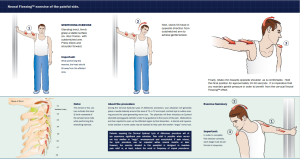
Neuroflossing (nerve mobilization) exercises for the cervical spine.