

How Does Discogenic Pain Develop?
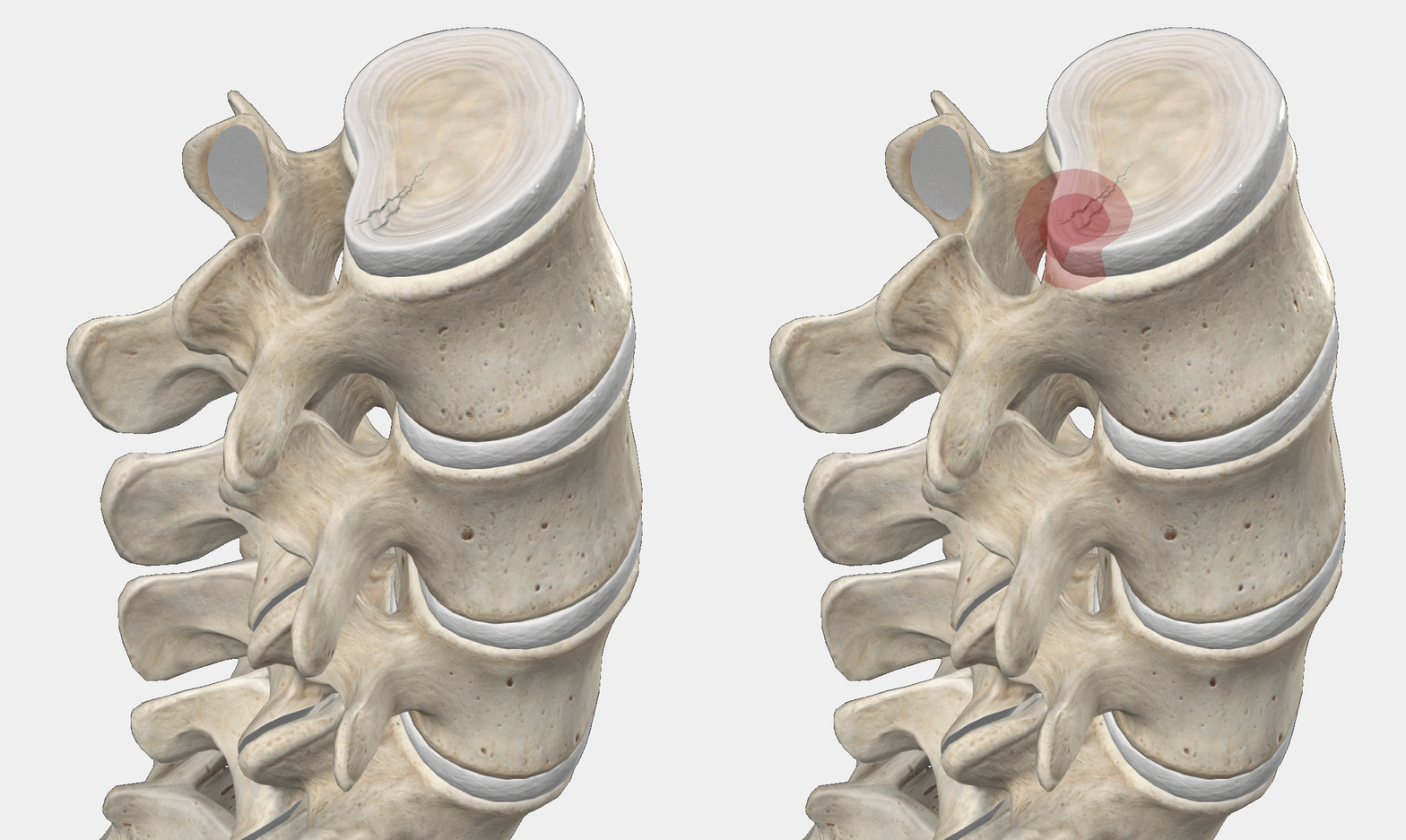
Discogenic pain, also known as disc-related pain, typically affects otherwise healthy young individuals, often athletes. It does not necessarily require a herniated disc; even a tear in the fibrous outer layer of the disc (annulus fibrosus) can cause significant pain.
MRI scans often show annular tears (ruptures), although these findings are not always clearly described in the radiology report. However, the patient’s symptoms are often characteristic.
Patients with lumbar disc injury usually cannot sit for long periods. Standing may be uncomfortable but is generally easier than sitting. Walking—and especially lying down—often relieves symptoms.
In the cervical spine, disc-related pain may present as neck pain or headaches. Symptoms often improve spontaneously, but recurrence is common.
How Can it be Treated?
In such cases, long-term improvement may be achieved with regenerative therapies such as stem cell or PRP (platelet-rich plasma) treatments.
During these procedures, the patient’s own blood or bone marrow is processed using specialized techniques (centrifugation), and the concentrated regenerative cells are then injected into the damaged areas of the spine, including the intervertebral disc1–3 .
These blood components and cells play a key role in the body’s natural healing processes, which we utilize to support spinal regeneration.
In certain cases—particularly when disc degeneration is associated with annular damage and disc bulging (protrusion)—and when needle-based minimally invasive treatments are unsuccessful, annuloplasty may be considered.
This procedure involves repairing the damaged annulus, reducing nerve sensitivity, and decreasing or eliminating disc bulging. At our clinic, this is performed endoscopically without general anesthesia4,5 .
Before considering minimally invasive interventions, physiotherapy is always recommended. However, in the case of disc-related conditions, exercises must be carefully tailored and performed with caution.
Source:
1. Atluri S, Murphy MB, Dregalla R, Herrera J, Boachie-Adjei K, Bhati SVivek Manocha V, Navneet Boddu, Pavan Yerramsetty, Zaid Syed, Meghana Ganjam, Divit Jain, Zaynab Syed, Nikhil Grandhi and LM. Evaluation of the Effectiveness of Autologous Bone Marrow Mesenchymal Stem Cells in the Treatment of Chronic Low Back Pain Due to Severe Lumbar Spinal Degeneration. Pain Physician. 2022;193–207.
2. Kirchner F, Anitua E. Intradiscal and intra articular facet infiltrations with plasma rich in growth factors reduce pain in patients with chronic low back pain. J Craniovertebr Junction Spine. 2016;7(4):250.
3. Centeno C, Markle J, Dodson E, Stemper I, Williams CJ, Hyzy M, et al.
4. Lee, Jung Hwan, and Sang-Ho Lee. „Clinical Efficacy of Percutaneous Endoscopic Lumbar Annuloplasty and Nucleoplasty for Treatment of Patients with Discogenic Low Back Pain”. Pain Medicine 17, sz. 4 (2016): 650–57. https://doi.org/10.1093/pm/pnv120.
5. Manabe, Hiroaki, Kazuta Yamashita, Fumitake Tezuka, et al. „Thermal Annuloplasty Using Percutaneous Endoscopic Discectomy for Elite Athletes with Discogenic Low Back Pain”. Neurologia Medico-Chirurgica 59, sz. 2 (2019): 48–53. https://doi.org/10.2176/nmc.oa.2018-0256.