

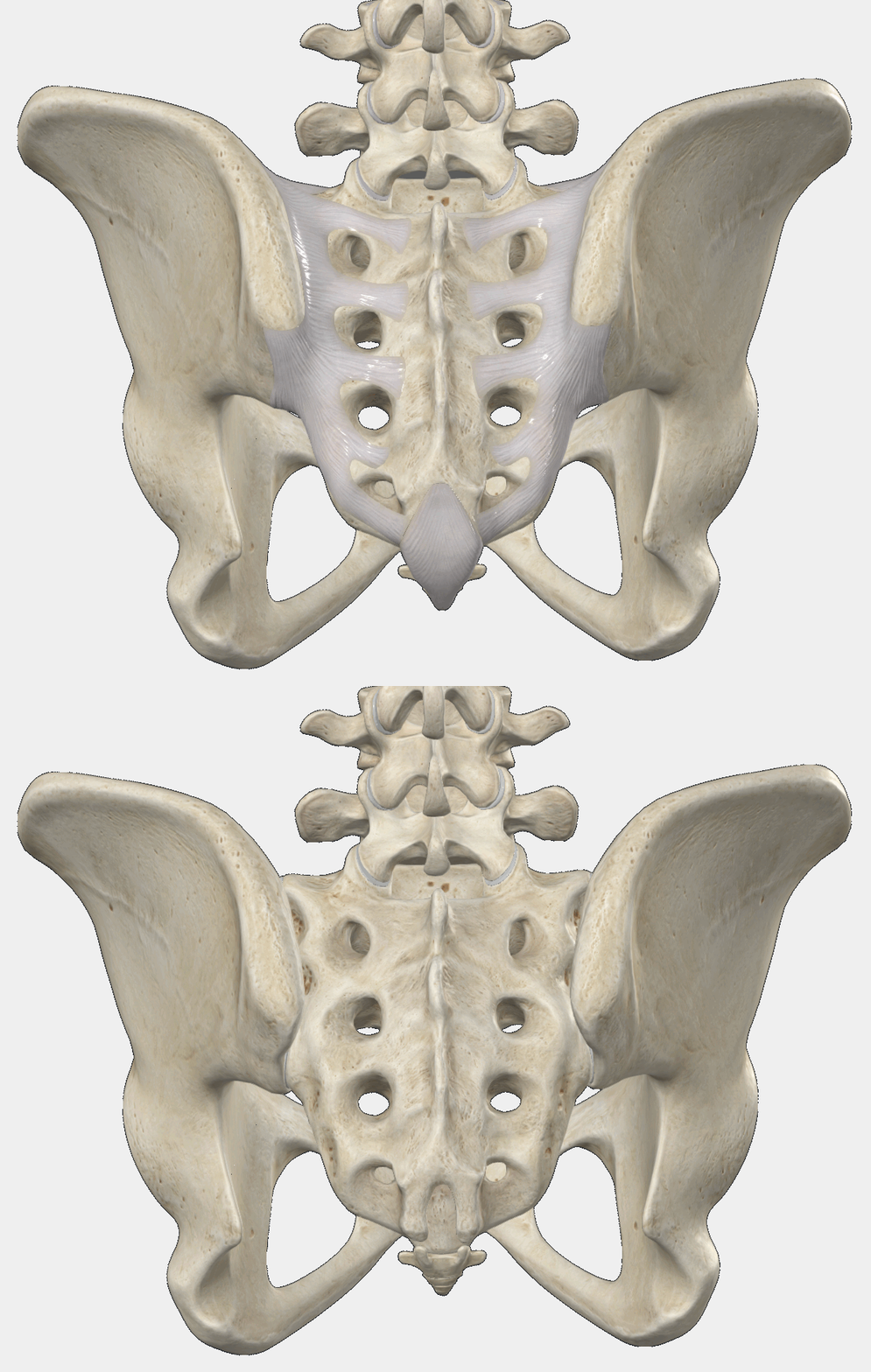
What is the Sacrum?
The sacroiliac (SI) joint is located where the pelvis meets the sacrum, which consists of the last five fused vertebrae at the base of the spine.
How Does Sacroiliac Pain Develop?
Sacroiliac joint pain most commonly affects older adults, pregnant or postpartum women, and individuals who have experienced trauma—such as falling onto the buttocks or being involved in a car accident where the knees hit the dashboard.
In these cases, the joint may become unstable or “sheared,” leading to pain and dysfunction.
How Can it be Treated?
Sacroiliac joint pain can be treated with radiofrequency therapy, during which the nerves supplying the SI joint are temporarily deactivated—typically providing pain relief for around one year. The effectiveness of this treatment is supported by multiple randomized controlled trials¹.
In many cases, the underlying instability can be addressed with prolotherapy or PRP (platelet-rich plasma) therapy. These treatments involve injecting the body’s own healing components into the ligaments responsible for joint stability, promoting tissue regeneration and long-term improvement².
Source:
1. Vanelderen P, Szadek K, Cohen SP, De Witte J, Lataster A, Patijn J, et al. 13. Sacroiliac Joint Pain. Pain Pract. 2010;10(5):470–8.