

What is Failed Back Surgery Syndrome (FBSS)?
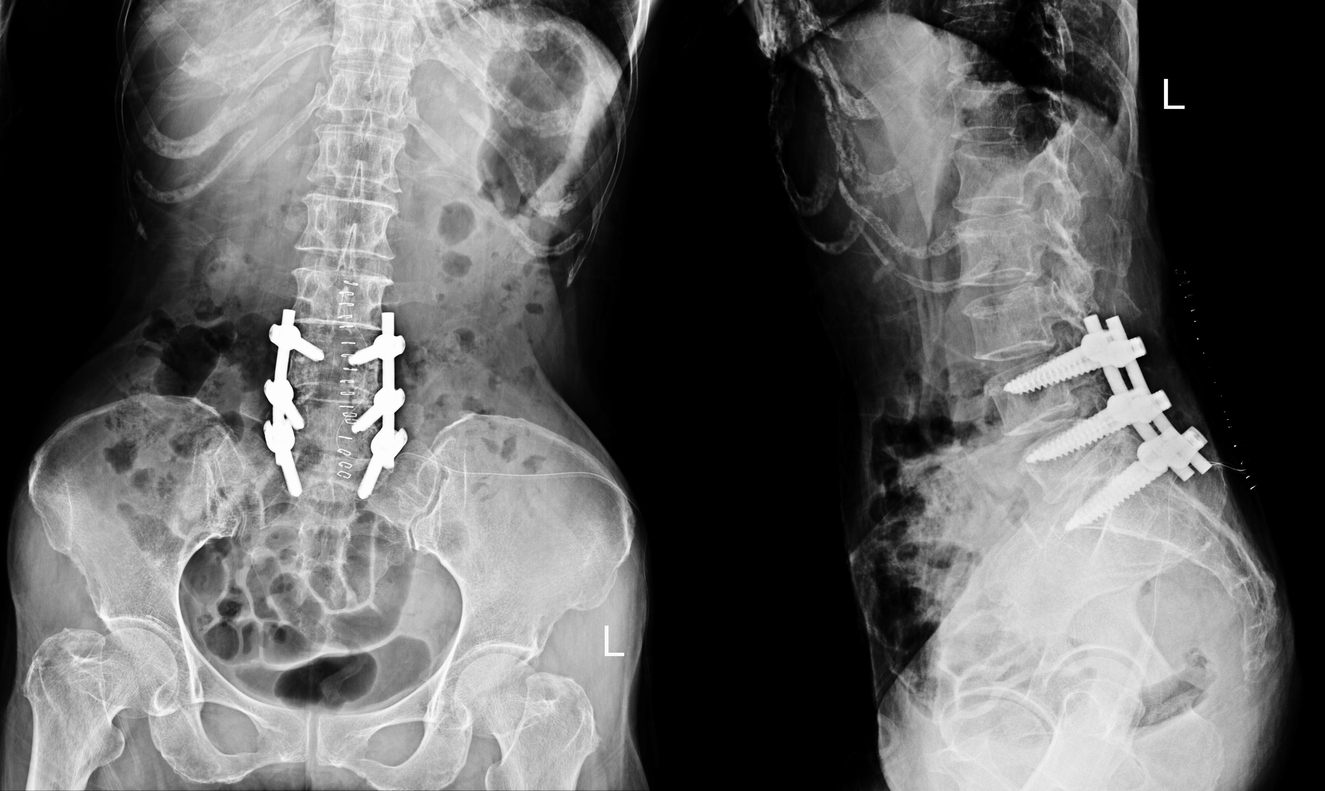
Failed Back Surgery Syndrome (FBSS), also known as Persistent Spinal Pain Syndrome (PSPS), refers to a condition in which patients continue to experience pain after spinal surgery.
This includes patients whose symptoms did not improve, improved only temporarily, or who developed new symptoms following surgery. It also applies to those who initially had a successful procedure but later developed new complaints due to ongoing spinal degeneration.
It is important to note that outcomes tend to worsen with repeated surgeries. While the success rate of a first spinal surgery exceeds 50%, this decreases to approximately 30%, 15%, and 5% for the second, third, and fourth surgeries, respectively¹.
What Causes Persistent Pain after Spine Surgery?
Several factors may contribute to ongoing pain, including:
-
Recurrent disc herniation
-
Epidural scar tissue formation
-
Increased instability in the segments above or below the operated level
-
Vertebral slippage due to instability
-
Acquired spinal canal narrowing (spinal stenosis)
How Can it be Treated?
Treating FBSS can be particularly challenging.
Simple epidural injections often provide only short-term relief—or none at all—because scar tissue may prevent the medication from reaching the affected area.
A more effective option may be epidurolysis, a targeted, minimally invasive procedure. Under X-ray (fluoroscopic) guidance, a catheter is advanced to the affected nerve root, where scar tissue is released and medication is delivered directly to the source of the problem.
Another treatment option is the implantation of a spinal cord stimulator (SCS), which can help reduce chronic pain by modulating pain signals.
Source:
1. Andersson GBJ. Evaluation of results in lumbar spine surgery conclusions. Acta Orthop. 1993;64(s251):143–143.