 Skip to main content
What is Trigeminal Neuralgia?
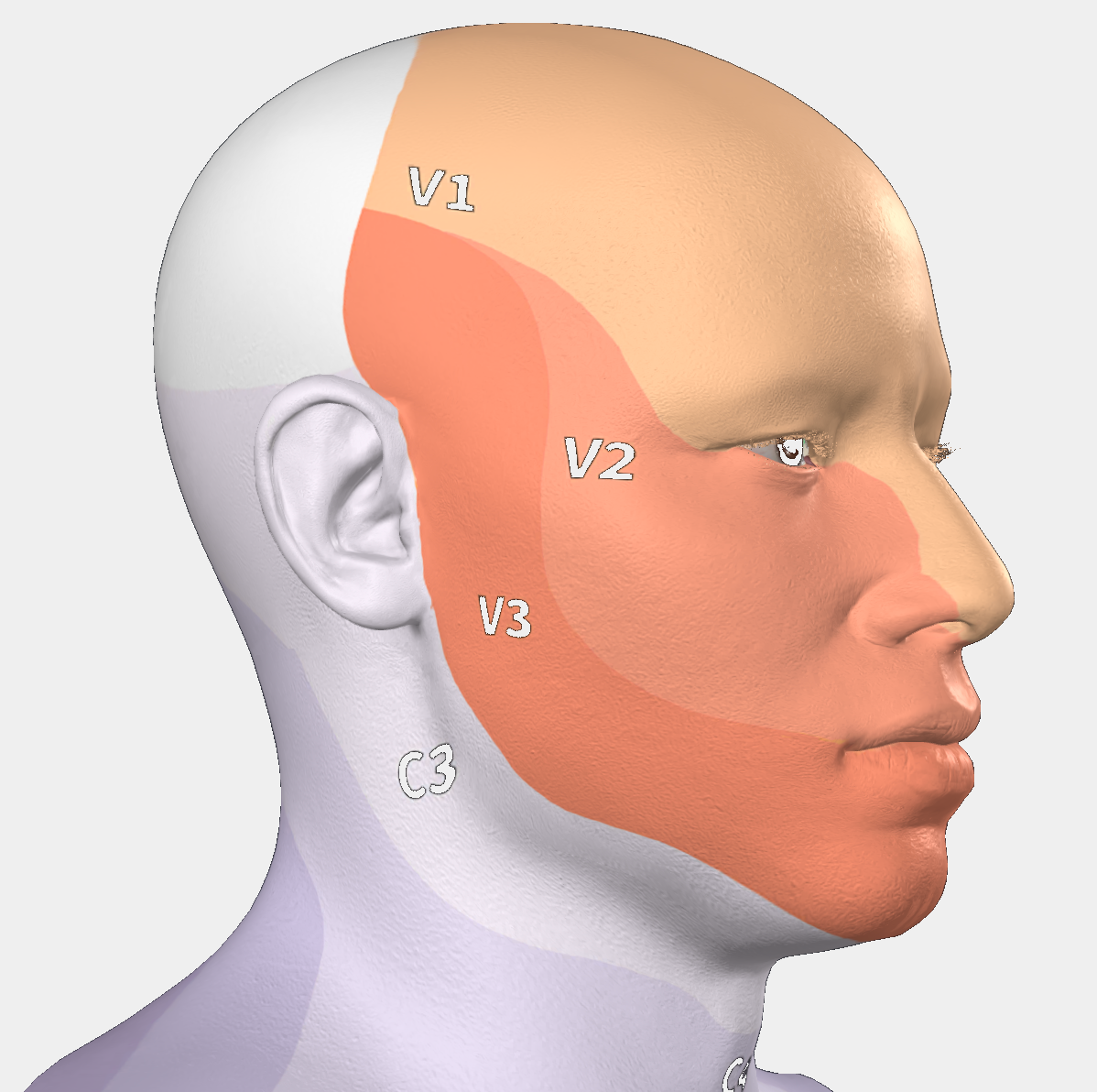
Trigeminal neuralgia, also known as tic douloureux, is a severe pain condition caused by dysfunction of the trigeminal nerve. This nerve is responsible for facial sensation, and during neuralgia, pain attacks typically occur in one or more areas of the face.
What Symptoms Does Trigeminal Neuralgia Cause?
Pain attacks associated with trigeminal neuralgia are sudden and sharp in nature. In most cases, they occur on one side of the face, last for a short duration—usually from a few seconds to a few minutes—and the patient is completely symptom-free between attacks.
The pain is often described as similar to an electric shock or a burning sensation in the affected area. Triggers may include touching the face, washing, speaking, chewing, or even the sensation of wind.
In long-standing cases, the clinical presentation may change over years or decades, or as a result of previous treatments, and a constant background pain may develop in addition to the attacks.
How Is Trigeminal Neuralgia Diagnosed?
The diagnosis of trigeminal neuralgia is usually made by the physician based on clinical examination and detailed discussion of symptoms.
In most cases, the underlying cause cannot be identified. However, in some cases trigeminal neuralgia may develop due to multiple sclerosis, or the nerve may be irritated by a pulsating artery or even a tumor in the brain. MRI examination is recommended to clarify these possibilities.
What Treatment Options are Available for Trigeminal Neuralgia?
Treatment of trigeminal neuralgia can be approached in several ways, and the physician recommends the most appropriate therapy based on individual symptoms and disease severity.
Medications
Conventional painkillers and anti-inflammatory drugs are usually ineffective. Recommended medications are mainly anticonvulsants, such as (ox)carbamazepine, gabapentin, pregabalin, etc.
Minimally Invasive Methods
Trigeminal neuralgia can be treated effectively and reliably with radiofrequency treatment of the Gasserian ganglion (the central ganglion of the trigeminal nerve) or with balloon catheter compression.
Surgical Intervention
In more severe cases, where conservative treatment is not effective and a clear cause is identified (e.g. an artery compressing the trigeminal nerve), neurosurgical intervention may be performed to relieve pressure on the nerve.